




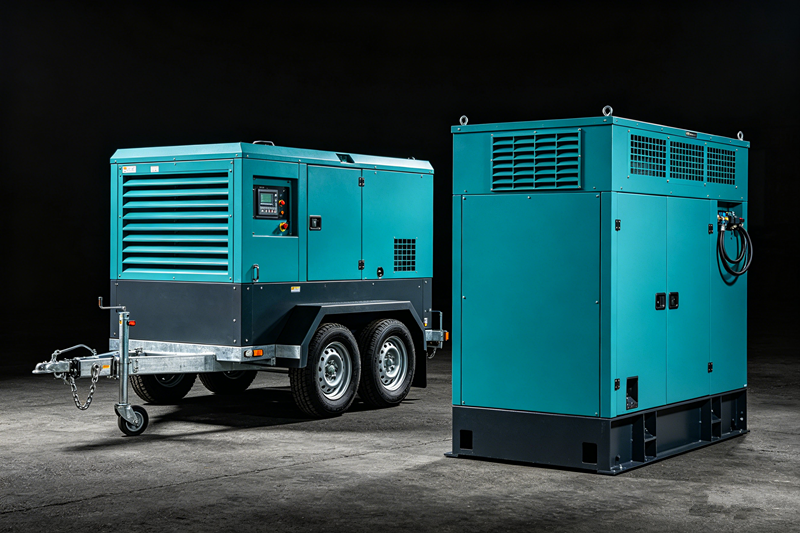
Mobile Trailer Generator Sets vs. Fixed Industrial Generator Sets: Which Is Right for Your Business?
In the global industrial landscape, reliable power supply is the backbone of seamless operations—whether you’re running a construction site in the Middle East, a manufacturing plant in Europe, a remote mining operation in Africa, or a data center in Southeast Asia. When it comes to choosing a diesel generator set, two primary options dominate the market: mobile trailer generator sets and fixed industrial generator sets. Both are designed to deliver stable power, but they differ dramatically in mobility, installation, performance, and ideal use cases. Choosing the wrong type can lead to inefficient operations, unnecessary costs, and even costly downtime when power is most critical.
This comprehensive guide will break down the key differences between mobile trailer and fixed industrial generator sets, explore their unique advantages and disadvantages, and provide practical insights to help you make an informed decision that aligns with your business needs, budget, and long-term goals. Whether you prioritize flexibility, long-term stability, or specific environmental requirements, understanding these two generator types is essential for optimizing your power supply strategy.
What Are Mobile Trailer Generator Sets and Fixed Industrial Generator Sets?
Before diving into the comparison, it’s important to clarify what each type of generator set entails—both are diesel-powered, but their design and purpose are fundamentally different.
Mobile Trailer Generator Sets: The “Portable Power”
Mobile trailer generator sets (also known as trailer-mounted generators) are self-contained power units mounted on a heavy-duty trailer with wheels, designed for easy transportation and quick deployment. They are essentially “power stations on wheels,” equipped with all necessary components—engine, alternator, fuel tank, control panel, and often a sound-dampening enclosure—integrated into a single, mobile unit. These generators range in power from 20KW to 2000KW, making them suitable for both small temporary projects and large-scale industrial needs.
Designed for mobility, they can be towed by a truck or other vehicles to any location with accessible roads, and most models can be set up and operational within 10-15 minutes of arrival. Modern mobile trailer generators often feature advanced designs, including hydraulic braking systems, weatherproof enclosures, and remote monitoring capabilities, making them adaptable to harsh outdoor environments—from desert heat to coastal humidity and even cold climates down to -30℃.
Fixed Industrial Generator Sets: The “Permanent Power Heartbeat”
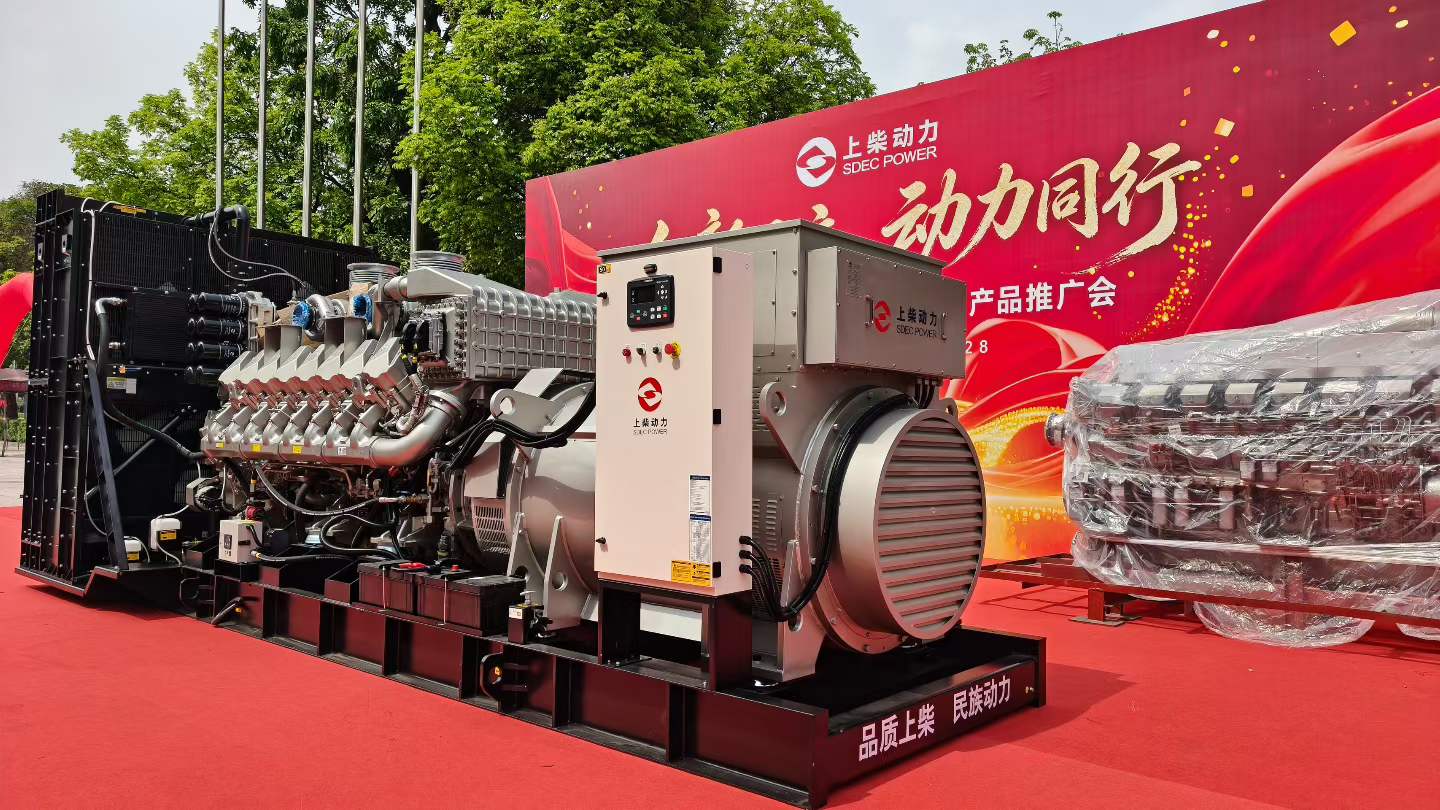
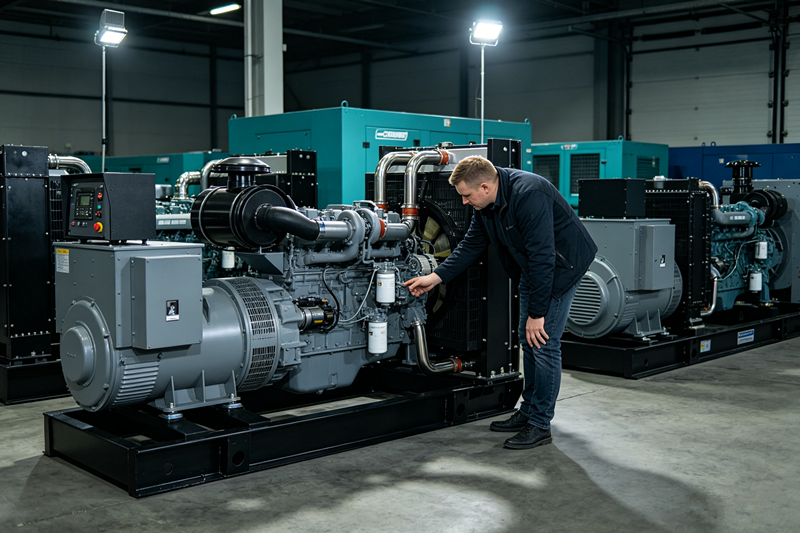
Fixed industrial generator sets (also called stationary generators) are designed for permanent installation at a specific location, typically bolted to a concrete foundation or mounted on a skid. They are engineered for long-term, continuous operation, serving as a reliable primary or backup power source for fixed facilities. These generators are available in a wide power range—from 8KW for small businesses to 3000KW for large industrial complexes—and are integrated into the facility’s electrical system via an automatic transfer switch (ATS) for seamless power切换 during grid outages.
Unlike mobile units, fixed generators are not designed to be moved once installed. They often feature larger fuel tanks, more robust cooling systems, and advanced control panels that allow for remote monitoring and automatic operation. Their permanent installation ensures maximum stability and efficiency, making them ideal for facilities that require 24/7 uninterrupted power, such as hospitals, data centers, and manufacturing plants.
Key Differences: A Side-by-Side Comparison
To help you clearly distinguish between the two types, we’ve compiled a detailed comparison of their core features, performance, and practical considerations—focusing on factors that matter most to overseas buyers and industrial operators.
1. Mobility and Deployment
Mobile Trailer Generators: Mobility is their biggest advantage. These units can be easily transported to multiple job sites, emergency locations, or temporary facilities. They require no permanent installation—simply tow them to the desired location, level the trailer, connect the power cables, and start the unit. This makes them perfect for projects with changing locations, such as construction sites, outdoor events, or disaster recovery efforts. For example, during a 2025 typhoon in Guangdong, China, mobile 200KW generator sets were deployed within 4 hours to restore power to 3 temporary避难所, supporting over 2000 people’s basic needs.
Most mobile trailer generators are equipped with features like hydraulic jacks for stable positioning, weatherproof enclosures to protect against the elements, and easy-access maintenance points—ensuring quick deployment even in remote or harsh environments. They also have a higher resale value due to their mobility, as they can be redeployed across different projects or sold to businesses with temporary power needs.
Fixed Industrial Generators: Mobility is their biggest limitation. Once installed, they cannot be moved without significant effort (often requiring cranes and specialized equipment). Their installation process is more complex and time-consuming, involving site preparation (such as pouring a concrete foundation), electrical wiring, and integration with the facility’s power system. This makes them ideal only for permanent facilities where power needs are consistent and location-specific. However, their permanent installation ensures maximum stability, with minimal vibration and reduced risk of damage from movement.
2. Performance and Load Capacity
Mobile Trailer Generators: They are available in a wide power range (20KW-2000KW), but most models are optimized for temporary or intermittent use. While they can handle continuous operation for short to medium periods (days to weeks), they are not designed for 24/7 year-round use like fixed generators. Modern mobile units offer excellent performance, with fuel-efficient engines (often from Cummins, Perkins, or Weichai) and stable power output, making them suitable for powering construction machinery, temporary offices, or emergency backup systems. Many also support parallel operation, allowing multiple units to work together to meet sudden high-power demands—for example, 4 x 500KW mobile generators can be paralleled to deliver 2000KW of power, matching the capacity of large fixed units.
Their performance is also enhanced by advanced features like smart control panels, remote monitoring, and low-noise enclosures, making them suitable for use in residential areas or events where noise pollution is a concern. However, their fuel tank capacity is typically smaller than fixed units, requiring more frequent refueling during extended use.
Fixed Industrial Generators: They are engineered for long-term, continuous operation (24/7, 365 days a year) and can handle higher power loads (up to 3000KW). Their robust design includes larger fuel tanks (some with automatic refueling systems), advanced cooling systems, and high-quality engines that are optimized for efficiency and durability. Fixed generators also offer better voltage stability, which is critical for sensitive equipment like data center servers, medical devices, or precision manufacturing machinery.
For example, a 800KW fixed Cummins generator installed at a三甲医院 in China successfully achieved 0.2-second seamless power切换 during a grid failure in 2025, ensuring uninterrupted power for operating rooms and ICUs—preventing potential medical accidents. Fixed generators also have a longer service life, with a design lifespan of 10,000-20,000 hours (compared to 2,000-5,000 hours for most mobile units) when properly maintained.
3. Installation and Maintenance
Mobile Trailer Generators: Installation is quick and simple—no concrete foundation or complex wiring is required. Most units can be set up by a single operator in 10-15 minutes. Maintenance is also more convenient in some cases: if a mobile unit requires repairs, it can be towed to a workshop or maintenance facility, reducing downtime for the job site. Routine maintenance (such as oil changes and filter replacements) is straightforward, with easy access to all components via removable panels. However, mobile units do require more frequent maintenance if used continuously, as their components are subjected to more vibration and movement during transportation.
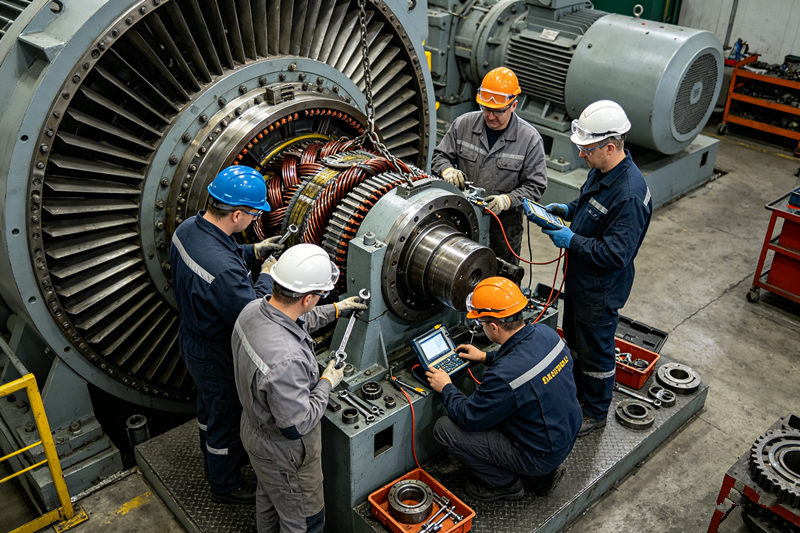
Fixed Industrial Generators: Installation is complex and time-consuming, often taking days or weeks to complete. It involves site preparation (concrete foundation), electrical integration with the facility’s power system, and compliance with local safety and building codes. Maintenance is typically done on-site, requiring trained technicians to access the unit. While routine maintenance (oil changes, filter replacements) is less frequent than for mobile units, major repairs can be more disruptive, as the unit is permanently installed and cannot be easily moved. However, fixed generators have lower maintenance costs over the long term, as they experience less wear and tear from movement and are designed for continuous operation.
4. Cost Considerations
Mobile Trailer Generators: The initial purchase price is often lower than fixed generators of the same power capacity, making them a cost-effective option for businesses with temporary or changing power needs. However, long-term costs can be higher if the unit is used continuously, due to higher fuel consumption (in some cases) and more frequent maintenance. They also require additional costs for transportation (towing vehicle) and storage when not in use. On the plus side, their high resale value can offset some of these long-term costs, as they can be easily resold or rented out when no longer needed.
Fixed Industrial Generators: The initial purchase price is higher, and installation costs (concrete foundation, wiring, permits) can add significantly to the total investment. However, long-term costs are lower due to their fuel efficiency, lower maintenance requirements, and longer service life. For example, a 1000KW fixed generator has a lower total cost of ownership (TCO) over a 10-year period compared to a mobile unit of the same capacity, thanks to its lower fuel consumption and reduced maintenance needs. Fixed generators also qualify for long-term energy efficiency incentives in many countries, further reducing operational costs.
5. Environmental Adaptability
Mobile Trailer Generators: They are designed to withstand harsh outdoor environments, with weatherproof enclosures (IP55 or higher) that protect against rain, dust, and extreme temperatures. Many models are equipped with desert-grade filtration systems for dusty environments and block heaters for cold climates, allowing them to operate reliably in -30℃ to 50℃. This makes them ideal for remote construction sites, mining operations, and disaster recovery efforts where environmental conditions are unpredictable.
Fixed Industrial Generators: They are typically installed in dedicated engine rooms or outdoor enclosures, which provide better protection against the elements. This makes them more suitable for stable environments, such as urban areas, industrial parks, or indoor facilities. While they can be adapted for harsh environments (with additional insulation, corrosion-resistant materials, or dust filters), this adds to the initial cost. Fixed generators also have better noise control, as they can be installed in sound-dampened rooms, making them suitable for residential areas or facilities where noise is a concern (e.g., hospitals, schools).
Which One Is Right for Your Business? Practical Use Cases
The choice between mobile trailer and fixed industrial generator sets ultimately depends on your specific business needs, application scenario, and long-term goals. Below are the most common use cases for each type, to help you align your decision with your operations.
Choose Mobile Trailer Generator Sets If:
• Your power needs are temporary or mobile: For example, construction sites, road construction, outdoor events (concerts, festivals), or temporary facilities (pop-up shops, temporary clinics). If your project location changes frequently, a mobile unit allows you to easily transport power to where it’s needed.
• You need emergency power quickly: Mobile generators are ideal for disaster recovery (earthquakes, floods, typhoons) or unexpected power outages in remote areas, where quick deployment is critical. They can be on-site and operational within hours, providing immediate power for emergency services, temporary shelters, or critical infrastructure.
• You have limited space or budget for permanent installation: If you don’t have the space for a concrete foundation or the budget for a fixed generator, a mobile unit offers a flexible, cost-effective alternative. It can be stored when not in use, saving space and reducing long-term operational costs.
• You need power for multiple locations: For businesses with multiple job sites (e.g., construction companies, rental firms), a mobile generator can be shared across locations, reducing the need to purchase multiple fixed units. This makes it a cost-effective solution for businesses with variable power needs across different sites.
Choose Fixed Industrial Generator Sets If:
• Your power needs are permanent and consistent: For example, manufacturing plants, data centers, hospitals, airports, or commercial buildings. If your facility requires 24/7 uninterrupted power, a fixed generator is the most reliable option, with automatic startup and seamless integration with your electrical system.
• You need high power capacity for continuous use: Fixed generators are designed to handle high power loads (up to 3000KW) and continuous operation, making them ideal for large industrial facilities, data centers with sensitive equipment, or manufacturing plants with 24/7 production lines.
• You prioritize long-term reliability and low maintenance: Fixed generators have a longer service life and lower maintenance costs over time, making them a better investment for businesses that need a long-term power solution. They also offer better voltage stability, which is critical for sensitive equipment that cannot tolerate power fluctuations.
• You operate in a stable environment: If your facility is in an urban area or industrial park, with access to regular maintenance and fuel supply, a fixed generator is the most efficient and cost-effective choice. It can be integrated into your facility’s infrastructure, providing a seamless power supply that requires minimal intervention.
Common Mistakes to Avoid When Choosing
To ensure you make the right decision, avoid these common mistakes that many overseas buyers make when choosing between mobile and fixed generator sets:
• Choosing based solely on initial cost: While mobile generators have a lower upfront cost, they may be more expensive in the long run if used continuously. Fixed generators, despite higher initial costs, offer better long-term value for permanent facilities.
• Underestimating power needs: Both mobile and fixed generators must be sized correctly to handle your peak load (including starting surge currents for motors and equipment). Under-sizing can lead to overloads and equipment damage, while over-sizing wastes fuel and increases costs.
• Ignoring environmental conditions: Mobile generators are better for harsh outdoor environments, while fixed generators are more suitable for stable, controlled environments. Failing to adapt the generator to your environment can lead to premature failure and costly repairs.
• Forgetting about maintenance and support: Fixed generators require on-site maintenance, so ensure you have access to local technicians. Mobile generators may need to be towed for repairs, so check the manufacturer’s global support network and spare parts availability.
• Overlooking compliance with local regulations: Different countries have different safety, noise, and emission standards. Ensure your generator (whether mobile or fixed) meets local requirements to avoid legal issues and fines. For example, European countries require compliance with CE standards, while the US requires EPA certification for emissions.
Conclusion: Align Your Choice with Your Business Goals
Mobile trailer generator sets and fixed industrial generator sets are both excellent power solutions, but they serve different purposes. Mobile units offer flexibility, quick deployment, and cost-effectiveness for temporary or mobile power needs—making them ideal for construction, emergency response, and multi-site operations. Fixed units provide long-term reliability, high performance, and low maintenance for permanent facilities that require 24/7 uninterrupted power—such as data centers, hospitals, and manufacturing plants.
When making your decision, consider your power load, application scenario, budget, and long-term goals. If you’re still unsure, many reputable generator manufacturers (including Guangxi Xinchai) offer free load assessments and consulting services to help you choose the right type and size of generator for your business. We specialize in both mobile trailer and fixed industrial generator sets (8KW-2000KW), featuring engines from Cummins, Perkins, Weichai, Yuchai, and Shangchai—all certified to meet global standards (ISO9001, ISO14001, CE).
No matter which type you choose, investing in a high-quality generator set is essential for ensuring business continuity, protecting your equipment, and avoiding costly downtime. By understanding the key differences between mobile and fixed generators, you can make an informed decision that drives efficiency, reduces costs, and supports your business growth—no matter where in the world you operate.
If you need help determining whether a mobile trailer or fixed industrial generator set is right for your specific application, contact our team today for a free consultation. Our experts will work with you to assess your power needs and recommend the best solution for your business.
Related Posts