




How to Choose the Right Diesel Generator Set for Your Business?
In the global industrial and commercial landscape, a reliable diesel generator set is not just a backup power solution—it’s a critical investment that ensures business continuity, protects equipment, and avoids costly downtime. Whether you’re running a construction site in Southeast Asia, a hospital in Africa, a data center in Europe, or a manufacturing plant in South America, choosing the right diesel generator set can make the difference between smooth operations and unexpected disruptions. With so many options on the market—from 8KW small units to 2000KW industrial-grade systems, and brands like Cummins, Perkins, Weichai, Yuchai, and Shangchai—it’s easy to feel overwhelmed. This guide will walk you through every key factor to consider, helping you make an informed decision that aligns with your business needs, budget, and long-term goals.
Before diving into specific details, it’s important to understand that there is no “one-size-fits-all” diesel generator set. Your choice depends on a unique combination of your power requirements, application scenario, environmental conditions, and operational preferences. Rushing into a purchase without proper research can lead to inefficient performance, high maintenance costs, or even a generator that fails to meet your critical power needs when you need it most. Let’s break down the process step by step, covering everything from calculating your power load to selecting the right brand, type, and configuration.
Step 1: Calculate Your Actual Power Load (The Most Critical Step)
The first and most essential step in choosing a diesel generator set is determining how much power you actually need. This is known as your “load capacity,” and miscalculating it is one of the most common mistakes businesses make. Choosing a generator that’s too small will result in overloads, which can damage the generator and your connected equipment. Choosing one that’s too large will waste fuel, increase initial costs, and lead to inefficient operation (a generator running at low load for extended periods can suffer from “wet stacking,” a condition that reduces performance and lifespan).
To calculate your load capacity, follow these steps:
• List all equipment that will be powered by the generator: This includes everything from machinery and lighting to computers, HVAC systems, and emergency equipment. Be sure to include both essential loads (equipment that must run during a power outage) and non-essential loads (equipment that can be temporarily shut down).
• Find the power rating of each piece of equipment: Check the nameplate or user manual of each device to find its rated power, usually listed in kilowatts (KW) or horsepower (HP). Note that some equipment (like motors, compressors, or pumps) require a “starting surge current” that is 2-3 times their rated running current. For example, a 10KW motor may require 25KW of starting power, so you must account for this surge when calculating your total load.
• Calculate the total running load and starting load: Add up the rated power of all equipment to get your total running load. Then, add the highest starting surge current to this total to get your peak starting load. The generator you choose must have a rated power that is at least 10-20% higher than your peak starting load to accommodate unexpected fluctuations and ensure reliable operation.
For example, if your total running load is 50KW and your highest starting surge is 30KW, your peak load is 80KW. You should choose a generator with a rated power of at least 90-100KW to ensure it can handle the surge without overload. If you’re unsure about calculating your load, many reputable generator manufacturers (including us at Guangxi Xinchai) offer free load assessment services to help you get it right.
Step 2: Determine the Application Scenario
Your application scenario will significantly impact the type of diesel generator set you need. Different environments and uses require different configurations, such as open-type vs. silent-type units, fixed vs. portable systems, or special adaptations for extreme conditions. Here are the most common application scenarios and their corresponding requirements:
1. Backup Power (Standby Use)
If you need a generator for backup power (e.g., to keep a hospital, data center, or commercial building running during grid outages), you’ll prioritize reliability, quick startup time, and automatic operation. Look for generators with automatic transfer switches (ATS), which can detect a grid failure and start the generator within seconds, ensuring minimal downtime. Standby generators are typically used for short periods (a few hours to a few days at a time), so fuel efficiency and long-term running capacity are less critical than quick response and reliability.
2. Prime Power (Continuous Use)
If you’re using the generator as your primary power source (e.g., in remote areas without grid access, construction sites, or mining operations), you’ll need a unit designed for continuous operation. Prime power generators are built to run for extended periods (24/7 for weeks or months) and must be fuel-efficient, durable, and easy to maintain. Look for generators with high-quality engines, large fuel tanks, and robust cooling systems to handle continuous use.
3. Mobile Power (Portable Use)
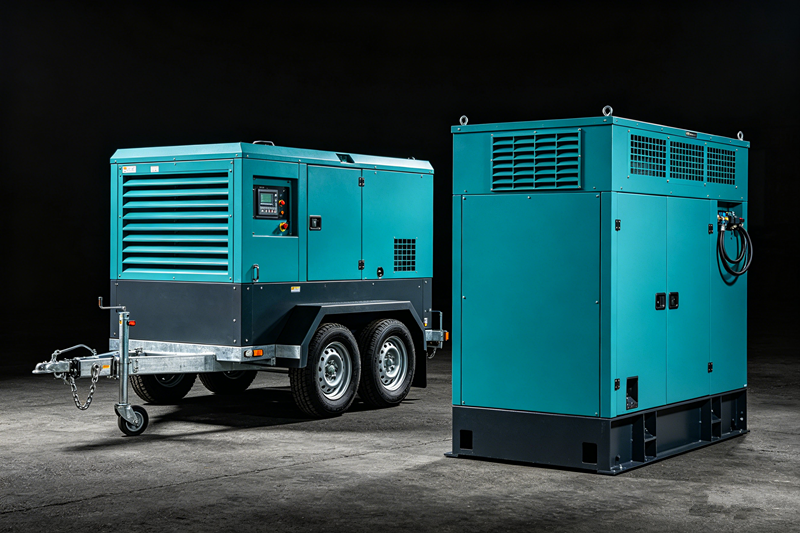
For applications that require mobility (e.g., construction sites, outdoor events, or emergency response), a mobile trailer generator is the best choice. These units are mounted on a trailer with wheels, making them easy to transport between locations. Look for features like a sturdy trailer frame, hydraulic brakes, and a weatherproof enclosure to protect the generator from the elements. Mobile generators are often used for short-term projects, so portability and ease of setup are key.
4. Special Environments
If your generator will be used in extreme conditions—such as high temperatures (deserts), low temperatures (polar regions), high humidity (coastal areas), or dusty environments (mines)—you’ll need a unit with special adaptations. For example, generators used in cold climates may require a block heater to ensure easy startup, while those in coastal areas need corrosion-resistant materials to prevent saltwater damage. Low-noise generators are also essential for residential areas, hospitals, or offices where noise pollution is a concern.
Step 3: Choose the Right Generator Type and Configuration
Once you’ve determined your load capacity and application scenario, it’s time to choose the right type and configuration of diesel generator set. Here are the key options to consider:
1. Open-Type vs. Silent-Type Generators
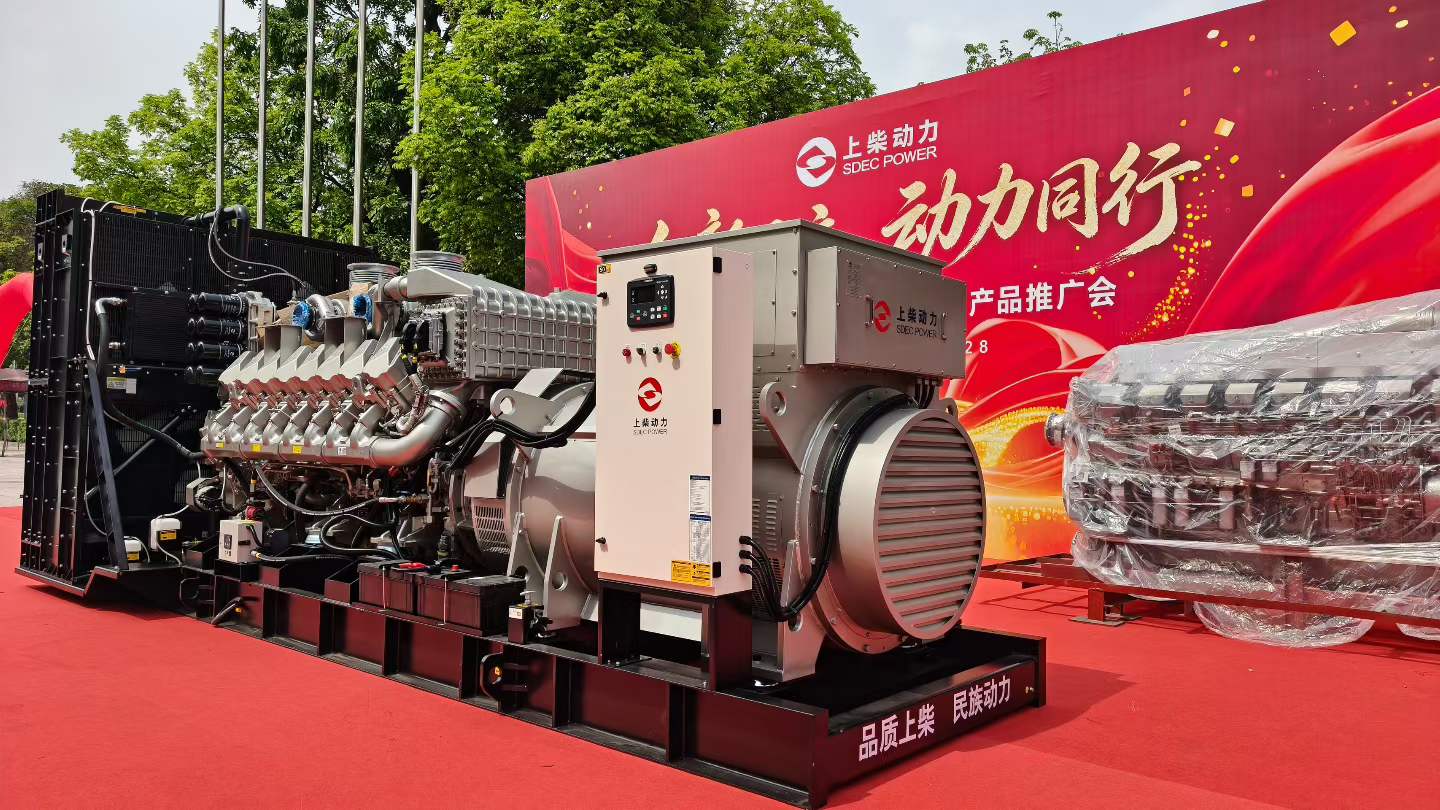
Open-type generators are the most basic and cost-effective option. They have no sound insulation, so they are loud (typically 75-85 dB) and best suited for outdoor, remote locations where noise is not a concern (e.g., construction sites, mining operations). Silent-type generators (also known as soundproof generators) are enclosed in a sound-dampening cabinet, reducing noise levels to 55-70 dB—quiet enough for residential areas, hospitals, or offices. While silent-type generators are more expensive, they are essential for applications where noise is a constraint.
2. Single-Phase vs. Three-Phase Generators
Single-phase generators are designed for small loads (usually up to 20KW) and are ideal for residential use, small businesses, or equipment that runs on single-phase power (e.g., lights, computers, small motors). Three-phase generators are used for larger industrial and commercial loads (20KW and above) and are required for equipment that runs on three-phase power (e.g., large motors, machinery, HVAC systems). Most industrial applications will require a three-phase generator, so be sure to check the power requirements of your equipment before making a choice.
3. Automatic vs. Manual Start
Manual start generators require an operator to start the unit manually (usually with a key or pull cord). They are simple, cost-effective, and best suited for applications where someone is always on-site to start the generator (e.g., small construction sites). Automatic start generators use an ATS to detect grid failures and start the generator automatically, making them ideal for backup power applications (e.g., hospitals, data centers) where quick, unattended startup is critical. Automatic generators are more expensive but offer greater convenience and reliability for standby use.
4. Additional Features
Depending on your needs, you may want to consider additional features to enhance the performance and usability of your generator:
- Remote monitoring and control: Allows you to monitor the generator’s status (fuel level, temperature, load) and control it remotely via a smartphone or computer—ideal for large facilities or remote locations.
- Parallel operation: Enables multiple generators to work together to increase power output, which is useful for growing businesses or applications with variable load requirements.
- Fuel tank capacity: A larger fuel tank will allow the generator to run for longer periods without refueling—critical for prime power applications or remote locations where refueling is difficult.
- Safety features: Look for generators with overload protection, low oil shutdown, high-temperature shutdown, and circuit breakers to protect the generator and your equipment from damage.
Step 4: Select a Reliable Brand and Manufacturer
The brand and manufacturer of your diesel generator set will have a significant impact on its performance, durability, and long-term maintenance costs. With so many brands available—including international brands like Cummins and Perkins, and Chinese brands like Weichai, Yuchai, Shangchai, and our own Xinchai—it’s important to choose a brand with a proven track record of reliability and a strong global support network.
Key Factors to Consider When Choosing a Brand:
• Reliability and durability: Look for brands with a reputation for building high-quality, long-lasting generators. Check customer reviews, case studies, and industry certifications to ensure the brand is trusted by other businesses in your industry.
• Global support network: A strong global support network means you can easily access spare parts, maintenance services, and technical support no matter where your business is located. This is critical for businesses operating in multiple countries or remote areas.
• Cost-effectiveness: While international brands like Cummins and Perkins are known for their reliability, they can be more expensive. Chinese brands like Weichai, Yuchai, and Xinchai offer a balance of quality and affordability, making them a popular choice for businesses looking to save costs without compromising on performance.
• Certifications: Choose a brand that holds international certifications like ISO9001 (quality management), ISO14001 (environmental management), and CE (European safety standards). These certifications ensure the generator meets global quality and safety requirements, making it easier to import and use in different countries.
At Guangxi Xinchai Power Generation Equipment Co., Ltd., we specialize in manufacturing high-quality diesel generator sets ranging from 8KW to 2000KW, featuring engines from Cummins, Perkins, Weichai, Yuchai, and Shangchai. Our products are certified by ISO9001, ISO14001, and GB/T28001, and we have a global support network to provide spare parts and maintenance services to our customers worldwide. We also offer custom solutions to meet the unique needs of different industries and applications.
Step 5: Consider Long-Term Costs and Maintenance
When choosing a diesel generator set, it’s important to look beyond the initial purchase price and consider long-term costs, including fuel consumption, maintenance, and spare parts. A generator with a lower initial price may end up costing more in the long run if it’s inefficient, requires frequent maintenance, or has expensive spare parts.
Fuel Efficiency
Fuel consumption is a major long-term cost for diesel generators, especially for prime power applications. Look for generators with high fuel efficiency (measured in liters per kilowatt-hour, L/KW·h). Modern diesel engines are more fuel-efficient than older models, so choosing a generator with a new, high-quality engine can save you money on fuel over time.
Maintenance Requirements
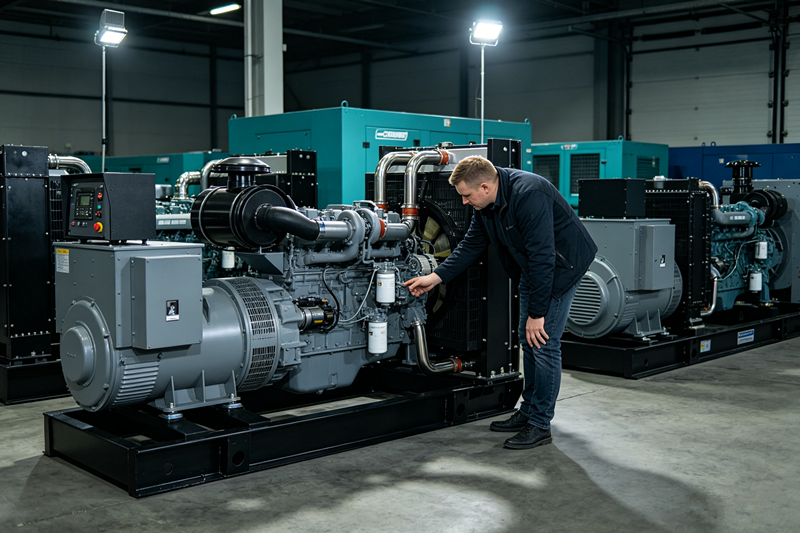
All diesel generators require regular maintenance to ensure reliable operation, including oil changes, filter replacements, and engine inspections. Look for generators with easy access to maintenance points (e.g., removable panels, accessible filters) to reduce maintenance time and costs. It’s also important to choose a brand with readily available spare parts, as delays in getting spare parts can lead to extended downtime.
Warranty
A good warranty is a sign of a manufacturer’s confidence in their product. Look for generators with a warranty of at least 1-2 years, covering parts and labor. Some manufacturers also offer extended warranties for an additional cost, which can provide peace of mind and reduce long-term maintenance costs.
Common Mistakes to Avoid
To ensure you choose the right diesel generator set, avoid these common mistakes:
• Underestimating load capacity: As mentioned earlier, this is the most common mistake. Always account for starting surge currents and leave a 10-20% buffer to avoid overloads.
• Choosing the cheapest option: While cost is important, a low-quality generator will likely fail sooner, require more maintenance, and cost more in the long run.
• Ignoring environmental conditions: Failing to adapt the generator to extreme temperatures, humidity, or dust can lead to premature failure.
• Forgetting about maintenance: Regular maintenance is essential for the longevity and reliability of your generator. Don’t skip maintenance to save money in the short term.
• Not checking the manufacturer’s support network: A generator is only as reliable as the support behind it. Make sure the manufacturer has a global support network to provide spare parts and technical assistance.
Conclusion
Choosing the right diesel generator set is a critical decision that requires careful consideration of your power needs, application scenario, configuration preferences, brand reliability, and long-term costs. By following the steps outlined in this guide—calculating your load capacity, determining your application scenario, choosing the right type and configuration, selecting a reliable brand, and considering long-term costs—you can make an informed decision that ensures your business has a reliable power supply when it matters most.
At Guangxi Xinchai, we understand that every business has unique power needs. Our team of experts is dedicated to helping you choose the perfect diesel generator set for your application, whether you need a small 8KW backup unit or a large 2000KW industrial system. With our high-quality products, global support network, and custom solutions, we’re committed to providing you with reliable power solutions that drive your business forward.
If you’re still unsure about which diesel generator set is right for you, contact us today for a free consultation and load assessment. Our team will work with you to understand your needs and recommend the best solution for your business.
|(注:文档部分内容可能由 AI 生成)
Related Posts